
This guide covers where Fakarava sits within the Tuamotu Archipelago, how to get there from Tahiti, the North-versus-South decision that shapes every itinerary, top activities, timing considerations, and the practical details US travelers need before booking flights.
Key Takeaways
- Fakarava suits nature lovers, divers, and snorkelers who want seclusion over resorts, nightlife, or shopping.
- North Fakarava (Rotoava): easier airport access and more services; South Fakarava: remoteness and Tumakohua Pass access.
- Book domestic flights and lodging early, then confirm transfers, meals, and excursions directly with your property.
- Verify current schedules, weather patterns, and entry requirements before you finalize any booking.
Understanding Fakarava and the Tuamotu
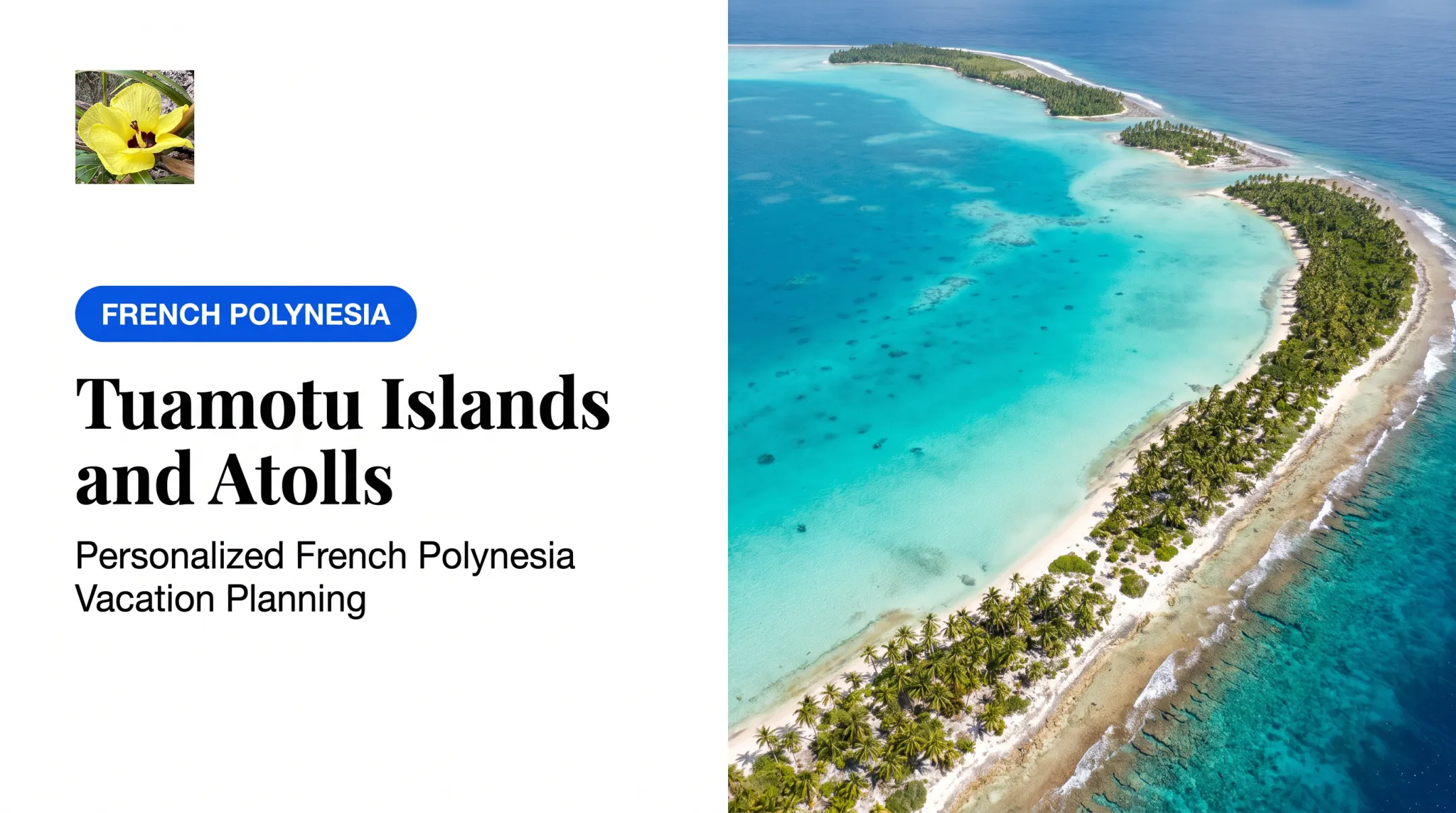
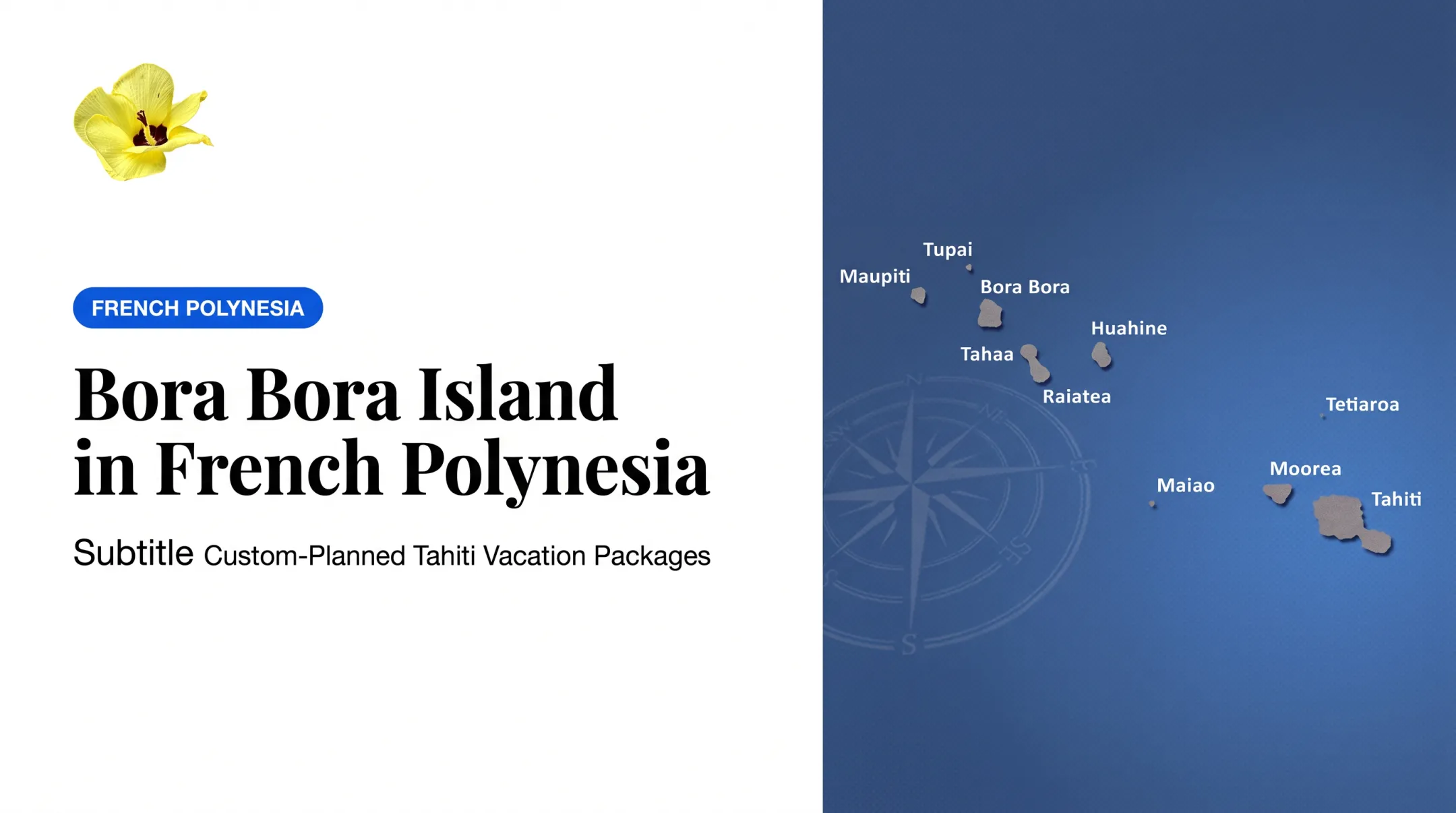
Fakarava sits within the Tuamotu Archipelago, a chain of low-lying coral atolls scattered northeast of Tahiti in French Polynesia. Unlike the volcanic peaks of Bora Bora or Moorea, an atoll is a ring-shaped coral reef enclosing a lagoon, typically dotted with small islets called motu. There's no central mountain here, just reef, sand, and turquoise water stretching to the horizon.
Tahiti Tourisme lists Fakarava's population at roughly 855 residents, spread mainly across the northern village of Rotoava, with a much smaller settlement at Tetamanu in the south. The lagoon itself covers an estimated 433 square miles (1,121 km²), making it one of the largest in French Polynesia.
Why Fakarava Made the UNESCO List
Fakarava joined an expanded seven-atoll UNESCO Biosphere Reserve in 2006, built on protections that originally began at nearby Taiaro back in 1977. That designation reflects the atoll's exceptional coral health, its role as a shark and fish nursery, and its cultural ties to traditional Polynesian black pearl farming.
Expect a destination shaped by that protected status:
- Limited large-scale development and few dining options outside guesthouses
- A slower rhythm built around pensions (family-run guesthouses), local boat operators, and outdoor time
- Black pearl farms as both an economic backbone and a visitor activity
- Village life that still centers on fishing, pearl cultivation, and the Catholic church
If you're picturing infinity pools and buffet restaurants, recalibrate. Fakarava rewards travelers chasing quiet lagoons and healthy reefs, not resort amenities.
Getting to and Around Fakarava
Nearly every US traveler reaches Fakarava the same way: fly into Tahiti's Faa'a International Airport, then connect domestically. Both Air Tahiti and Air Moana currently publish Fakarava routes, though flight frequency and whether a route is nonstop or makes an intermediate stop varies by date. Check both carriers directly before booking, since schedules shift seasonally.
Baggage limits to confirm before you book:
- Air Tahiti's standard economy checked-bag allowance runs 23 kg (50 lb), with a 5 kg (11 lb) carry-on limit
- Divers can typically add 5 kg (11 lb) for gear, subject to documentation and aircraft capacity
- Air Moana's terms differ, so confirm allowances with whichever airline issues your ticket
Cruise ships and private yachts occasionally call at Fakarava, but this shouldn't be your default plan unless you've booked a specific itinerary. Cargo boats and informal local transport are not reliable tourist options and shouldn't be treated as backup transportation.
Arriving and Getting Around North Fakarava
Once you land, don't assume a shuttle will be waiting. Arrange your pension or lodge transfer in advance.
Rotoava, the main village, is easy to cover without a car:
- Bicycles — many properties lend them free of charge
- Electric bikes and scooters — local rentals exist, but stock is limited, so reserve ahead in busier months
- Taxis and car rentals — available, but sparse
Download offline maps before you arrive. Cell signal thins out fast once you leave the village.
The North-to-South Boat Transfer
Moving between North and South Fakarava is a boat-only affair, and it is often the biggest logistical decision in your itinerary. Government navigation data puts the distance at roughly 27 nautical miles, though actual transfer duration depends on wind, sea state, and which operator you use. Some accommodations include this transfer; others charge separately and require advance coordination on luggage and pickup points. Never assume a same-day, last-minute transfer will be available, especially outside peak season.

Where to Stay: North vs. South Fakarava
Your choice between Rotoava and Tetamanu shapes everything else about your trip, from daily activities to how much you'll spend on transfers.
| Factor | North (Rotoava) | South (Tetamanu) |
|---|---|---|
| Access | Near the airport, bicycle-friendly | Boat-only, ~27 nautical miles south |
| Lodging style | Guesthouses and pensions | Bungalow-style properties, often meal-inclusive |
| Services | Shops, church, more dining options | Minimal services, limited power/Wi-Fi |
| Signature draw | Village culture, pearl farms | Tumakohua Pass diving and shark encounters |
| Best for | First-timers, non-divers, shorter stays | Serious divers, seclusion-seekers |
North Fakarava: Convenience and Village Life
Rotoava gives you proximity to the airport, easier lagoon snorkeling, and a front-row seat to black pearl cultivation. It's the practical base if you want reliable supplies, a wider range of guesthouses, or simply less transit time eating into your trip.
South Fakarava: Remote and Wildlife-Focused
Tetamanu trades convenience for access to Tumakohua Pass. Properties here sit steps from the South Pass, and many include meals since there's nowhere else nearby to eat.
Confirm power hours, Wi-Fi availability, and whether the property accepts cards before you go. These details vary from property to property and can change without much notice.
Lodging guidance by traveler type:
- Divers prioritizing the South Pass should book Tetamanu-area lodging directly
- Non-divers wanting beaches and lagoon excursions do well based in Rotoava
- Couples seeking seclusion may prefer the south, accepting fewer amenities
- Travelers needing connectivity for work or peace of mind should stay north
Always verify current room categories, meal plans, and cancellation policies directly with the property. Avoid treating any single pension as universally "best," since availability and quality shift often on a small island.
If your schedule allows, splitting your stay between north and south gives you the fullest picture. Just remember the transfer day eats into your usable activity time.
Best Things to Do in Fakarava
Fakarava's appeal is almost entirely water-based, though the village offers its own quiet charm.
Snorkeling and Lagoon Exploration
Non-divers have plenty of options. Shallow reef areas, sandbars, and motu near Rotoava make for easy snorkeling.
Excursions to Motu Teahatea (sometimes offered locally as the Green Lagoon) reach calmer, shallower water. Kayaking and stand-up paddleboarding are popular add-ons. Always check weather and current conditions with your operator before heading out.
North Fakarava Highlights
- Cycling around Rotoava's coastal road, past the historic church
- Relaxing at PK9 Beach, a white-sand stretch on the north side
- Visiting Tokapa Lighthouse (also spelled Topaka), built in 1957
- Touring a pearl farm or joining a pearl lottery experience where offered
South Fakarava Highlights
The south rewards travelers who make the transfer. Expect pink-sand areas, Hirifa Beach, and the tiny village of Tetamanu itself. Guided kayaking and short hikes are possible, but access depends heavily on your accommodation, tides, and the operator's schedule that week.
Diving Garuae Pass and Tumakohua Pass
These two passes offer different experiences. Garuae, the north pass, spans roughly 1,600 meters and delivers tide-driven drift dives with strong currents. Tumakohua, the south pass, is narrower and famous for its shark density.

Requirements vary by operator, so confirm certification expectations. Some properties prohibit independent diving in the Tetamanu area entirely. Some operators offer discovery dives for beginners, but not all sites suit first-timers.
Is There Really a "Wall of Sharks"?
Yes, and it's documented, not exaggerated. Research published in the Journal of Fish Biology recorded gray reef shark aggregations of up to approximately 700 individuals in the South Pass study area. Numbers fluctuate around the seasonal grouper spawning event.
This is primarily a scuba diving phenomenon; snorkelers may spot sharks but shouldn't expect the same density. Sightings are never guaranteed on any given day.
Conservation reminders for every water activity:
- Book qualified, briefed operators for all diving and snorkeling
- Never touch coral or wildlife, and minimize sunscreen near reefs—even products labeled reef-safe
- Don't feed or bait marine life under any circumstance
- Stay out of passes and strong currents without a qualified guide
When to Visit and How to Plan Your Trip
French Polynesia's broad seasonal pattern runs a drier period from roughly May through October and a wetter stretch from November through April. These are regional guidelines, not Fakarava-specific guarantees, so weather, transfers, and underwater visibility can still vary within either window.
Timing for Wildlife
If shark aggregations and the grouper spawning event top your list, aim for the June or July full moon, when past studies documented the largest gatherings. Treat this as a seasonal possibility rather than a fixed calendar promise, since the exact timing shifts with the lunar cycle each year.

How Long to Stay
- Short stop: 2-3 nights, North Fakarava only, enough for cycling and lagoon snorkeling
- North-only trip: 4-5 nights, comfortable pace with village and pearl farm time
- South-focused diving trip: 5-7 nights, factoring in the boat transfer both ways
- Combined North-and-South itinerary: 7-10 nights, splitting time while accepting a transfer day
Planning Checklist
- Book international flights to Tahiti, then confirm your domestic connection to Fakarava
- Reserve lodging early, especially South Pass properties with limited rooms
- Confirm boat transfers, meal plans, and excursion availability directly with your property
- Purchase travel insurance covering delays and medical evacuation
- Build in a buffer day in case weather disrupts inter-island transport
Coordinating flights, transfers, and lodging across two atoll zones gets complicated fast—especially if you're also adding Tahiti, Bora Bora, Moorea, or Rangiroa. Magical Tahiti Vacations offers fee-free, personalized planning for multi-island trips, coordinating flights, transfers, stays, and activities in one itinerary.
Founder Michael Rockwell is a Level 3 Certified Tahiti Specialist who has planned more than 300 Tahiti vacations, with current knowledge of schedules and transfer realities on the ground.
Practical Tips and Responsible Travel
Money and Connectivity
The local currency is the CFP franc (XPF). Card acceptance exists in Rotoava but isn't guaranteed everywhere, especially at South Pass properties. Carry backup cash from Tahiti before you fly out. Mobile carrier Vini lists 4G coverage for Fakarava, though dependable data at Tetamanu or on outlying motu is unreliable.
What to Pack
- Reef-conscious sun protection and insect repellent
- Lightweight, breathable clothing and water shoes
- A reusable water bottle and any prescription medications
- Seasickness remedies for boat transfers
- Waterproof storage for passports and documents
- Chargers, since power isn't always continuous at remote properties
Insurance and Medical Access
Fakarava has a local infirmary, but no resident doctor on island. Serious diving incidents may require air evacuation.
Travel insurance with emergency medical evacuation and dive coverage isn't optional here—it's essential.
Entry Requirements
US citizens don't need a visa for stays up to 90 days within a 180-day period, according to the US State Department's French Polynesia travel information. Confirm current entry rules before departure.
Responsible Travel in the Biosphere Reserve
- Choose locally owned pensions and guides whenever possible
- Respect village customs and private property in Rotoava and Tetamanu
- Skip single-use plastic and never collect coral or shells as souvenirs
- Keep distance from wildlife and follow operator rules at passes and reefs
Frequently Asked Questions
How do I get to Fakarava from Tahiti?
You'll fly domestically from Tahiti's Faa'a Airport on Air Tahiti or Air Moana, depending on current schedules. Confirm flight frequency, baggage rules, and your accommodation's transfer arrangements before booking.
How far is Fakarava from Tahiti?
Fakarava sits in the Tuamotu Archipelago, reached by a short domestic flight from Tahiti. Total door-to-door travel time depends on your connection and any south-pass boat transfer, so check current schedules for your dates.
Can you swim in Fakarava?
Yes, lagoon and beach areas are generally suitable for swimming, but ocean passes can have strong, unpredictable currents. Always check local conditions and never enter moving water without a qualified guide.
Is there a wall of sharks in Fakarava?
The nickname refers to dense gray reef shark gatherings at the South Pass, documented at up to roughly 700 individuals in research studies. It's real, but sightings vary and are never guaranteed on any single dive or snorkel trip.
What is Fakarava known for?
Fakarava is known for its UNESCO Biosphere Reserve status, exceptionally clear lagoon, renowned pass diving, shark encounters, black pearl farming, pink-sand beaches, and a quiet village atmosphere.
Are the Tuamotu Islands worth visiting?
Absolutely, if you're a nature lover, diver, snorkeler, or sailor seeking remoteness. Travelers wanting a large-resort experience with extensive dining and nightlife may find the limited services and complex logistics less suited to their preferences.