
If you're searching for "Makatea Island vacation packages," here's the honest answer: there isn't a standard one. What exists is a highly customized, weather-dependent itinerary that has to be built and verified piece by piece. This guide walks through what Makatea actually offers, how travelers reach it, what to do once there, and how a Tahiti specialist can help you figure out whether it belongs in your 2026 trip.
Key Takeaways
- Makatea sits in the Tuamotu Archipelago and should be treated as a remote adventure add-on, not a fly-in resort stay.
- Access, lodging, guiding, and communications all need confirmation for your exact 2026 travel dates.
- The draw is raised-atoll cliffs, freshwater caves, mining ruins, climbing, and birdlife, not lagoon lounging.
- A Tahiti travel specialist can check current Makatea feasibility and suggest a smoother alternative if access falls through.
Why Makatea Is Different From a Typical French Polynesia Vacation
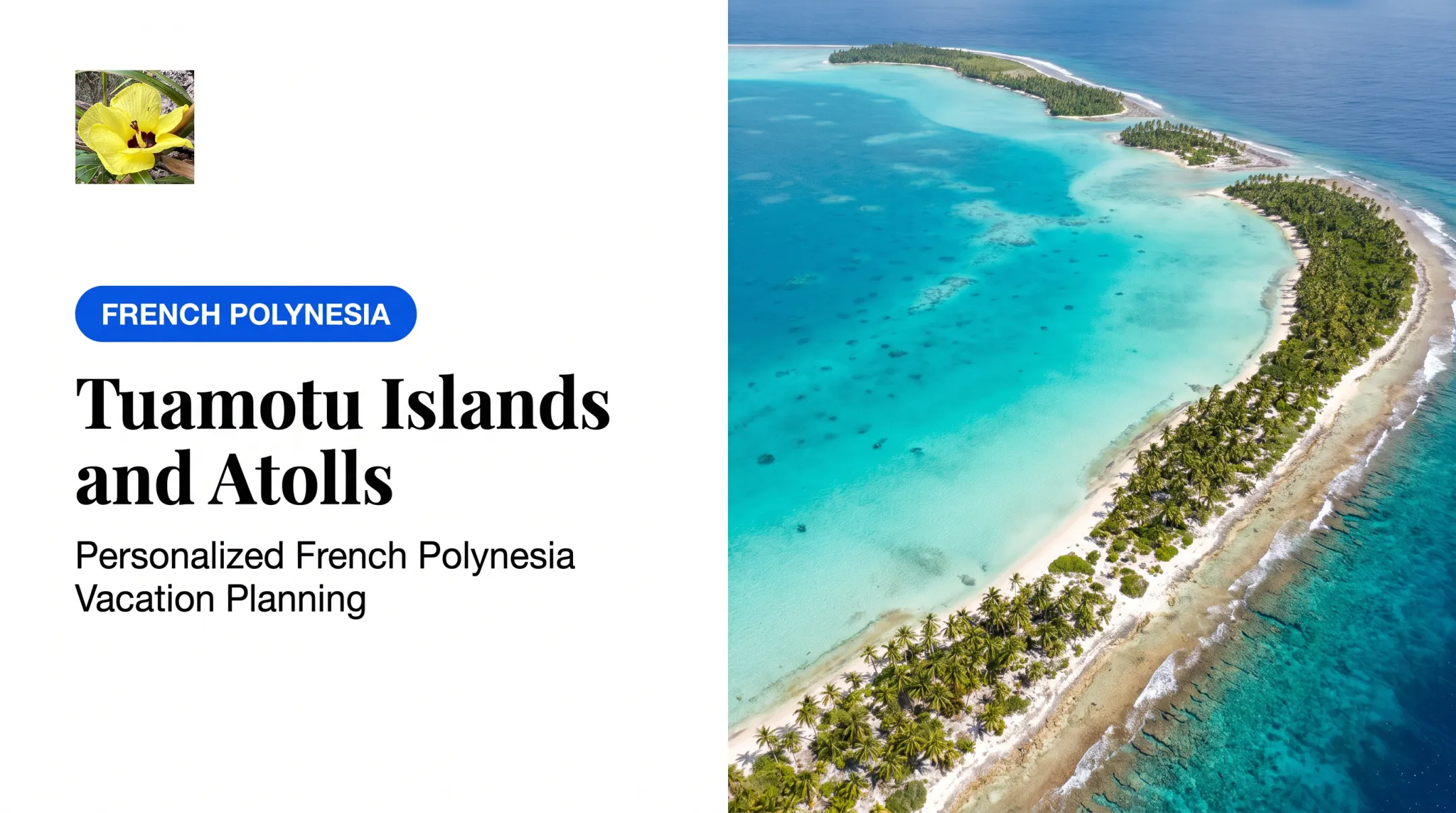
Makatea belongs to French Polynesia's Tuamotu Archipelago, but it doesn't look or behave like the coral atolls most travelers picture. Instead of a ring of low-lying motu wrapped around a calm lagoon, Makatea is an uplifted, raised atoll, pushed up out of the sea by geological forces tied to the Society hotspot swell.
Its plateau sits roughly 370 feet (113 meters) above sea level, making it one of the most dramatic landforms in the region.
What travelers find on the ground:
- Steep limestone cliffs ringing the coastline
- A relatively flat, forested interior plateau
- Freshwater caves carved into the limestone
- Reef edges and small beaches, but no protected central lagoon
That last point matters. If your idea of a Tuamotu vacation involves paddling out from a beach into glassy, sheltered water, Makatea won't deliver that. The old lagoon eroded and dissolved into the landscape long ago.
A Working Island, Not an Abandoned One
Makatea has serious industrial history. The Compagnie Française des Phosphates de l'Océanie mined the island from 1906 to 1966, extracting an estimated 11.2 million metric tons of phosphate. What's left behind includes a former factory, rail infrastructure, port remnants at Temao, and deep excavation holes across the plateau.

None of that means the island is deserted. A 2026 academic account of Makatea's tourism debate describes a resident community of roughly 100 people, along with family-run guesthouses and a local health post. Services are limited, but they exist, and travelers should book through local hosts rather than assume anything is available on arrival.
Makatea vs. Bora Bora or a Developed Tuamotu Island
| Factor | Makatea | Bora Bora / Moorea |
|---|---|---|
| Accommodation | Small guesthouses, family-run | Resorts, overwater bungalows, varied tiers |
| Access | Sea passage, weather-dependent | Scheduled flights |
| Dining | Home-style, limited options | Multiple restaurants, room service |
| Activities | Guided caving, climbing, mine visits | Excursions, water sports, spa |
| Spontaneity | Low — everything needs prearranging | High — book excursions on arrival |
If you want a low-risk honeymoon with reliable comfort, this table tells you most of what you need to know.
How to Reach Makatea Island and What to Verify for 2026
Makatea has no functioning commercial airstrip. Tahiti Tourisme's current access guidance confirms the island isn't served by scheduled flights, so getting there means going by sea.
Distance and Travel Time
Makatea sits about 140 miles (220 km) from Tahiti. A Papeete crossing typically runs 8 to 12 hours depending on weather and sea state. That wide window is intentional: sea conditions in the Tuamotus can add hours without warning.

Three general access paths exist:
- Scheduled or supply vessel passage from Papeete or Rangiroa, when cargo/passenger service is running
- Small-ship expedition cruise, such as Lindblad Expeditions' seven-day Tuamotus itinerary aboard National Geographic Orion, which lists a Makatea shore visit on day two
- Private charter boat, arranged through an operator with current local permissions, or via a Tahiti travel specialist who already works those channels
None of these should be treated as guaranteed daily service. Frequency, fares, and even whether a landing happens on a given day depend on conditions confirmed close to departure.
What to Confirm Before You Book
Run through this checklist with your travel advisor or whoever is arranging your trip:
- Confirmed transport operator with written cancellation and delay terms
- A local contact on Makatea who knows you're arriving
- Accommodation booked directly with a guesthouse, not assumed availability
- Food and drinking water arrangements, given limited local supply
- Emergency plan and nearest medical option
- Working phone or satellite communication
- Travel insurance that covers marine transport delays
- A buffer night in Tahiti or Rangiroa in case the crossing is postponed
Safety Notes Worth Taking Seriously
Old phosphate excavation holes on Makatea run 100 feet or more deep, and many aren't fenced or marked. Add cliffs, cave systems, strong currents, and limited medical services, and the rule is simple: stay with your guide. Don't wander into the mining zone or caves unaccompanied, no matter how tempting a photo looks.
What to Do on a Makatea Island Vacation
Once you've sorted transport, Makatea's activities fall into a few clear categories, and all of them are guided.
Mining History and the Old Settlement
Local guides lead visitors through the former mining zone, port remnants, and rusting locomotives near Temao. The appeal is genuine: it's an intact, open-air record of a French Polynesian industrial era most visitors never see.
The rule is simple: admire it, don't climb on it. Equipment left from the 1960s wasn't built to hold modern foot traffic, and unmarked shafts sit closer to the trails than you'd expect.
Caves and Climbing
Tahiti Tourisme identifies three known freshwater caves, with Hina Cave as the most visited. Whether swimming is permitted, and what gear you'll need, depends on current water levels and the guide's assessment that day. Confirm this locally rather than assuming a standing schedule.
Climbing is better documented. Tahiti Tourisme's own guidance describes more than 100 established climbing routes on Makatea's cliffs, covering everything from beginner-friendly lines to via ferrata sections. Expect to need:
- A helmet
- A climbing harness
- Sturdy, closed-toe footwear
- A local guide familiar with the routes
Nature and Wildlife
Makatea's remaining forest habitat supports rare endemic birds. A conservation assessment identifies the Makatea fruit-dove as Vulnerable and the Polynesian imperial-pigeon as Endangered. Coconut crabs, seabirds, and seasonal whale activity round out the picture, but no operator can promise sightings. Treat wildlife viewing as a bonus, not a checklist item.
The same guides can often arrange lower-impact local experiences: a home-cooked meal with a local family, a short village walk, or a small agricultural project. These aren't guaranteed year-round, but they're often the most memorable part of the trip.
How to Build a Makatea Vacation Package for 2026
A Makatea trip isn't one purchase. It's several pieces stitched together:
- International flights to Tahiti
- Inter-island transport (boat or connecting flight to Rangiroa)
- Makatea sea passage
- Local guiding for caves, climbing, or mining tours
- Guesthouse lodging and meals
- Travel insurance
- Buffer days for weather delays
Three Ways to Frame the Trip
- Makatea-focused expedition: a short, intensive stay built around hiking, climbing, and caving, best for adventure travelers with flexible schedules.
- Makatea as an add-on: a few days on a broader Society Islands vacation, pairing a Bora Bora or Moorea resort stay with a rugged Makatea extension.
- Small-ship or private-charter itinerary: programs like Lindblad's Tuamotus cruise that include Makatea only when the route and sea conditions allow it.

Whichever format you choose, build in flexible dates. A vessel, a landing, or a guide can fall through on short notice, and a rigid itinerary leaves no room to adjust.
This is where working with a specialist pays off. Michael Rockwell, founder of Magical Tahiti Vacations and a Level 3 Certified Tahiti Specialist, has personally planned more than 300 Tahiti vacations.
His team can review your priorities, coordinate French Polynesia logistics, check current Makatea access with suppliers, and suggest a workable alternative if the timing does not line up. Planning support comes with no added fee.
One honest caveat: no advisor should promise a published Makatea package, a guaranteed landing, or confirmed activity availability without written confirmation from the actual boat operator or guide. Treat anything less as a starting point, not a booking.
Who Should Visit Makatea—and How to Travel Responsibly
Makatea rewards a specific kind of traveler. You'll get the most out of it if you're:
- An experienced hiker, climber, or diver comfortable with rustic conditions and limited services
- A photographer or nature enthusiast drawn to raw landscapes
- Someone genuinely curious about industrial history and local culture
- Flexible enough to handle schedule changes without frustration
You'll probably be happier elsewhere if you're:
- Planning a honeymoon built around resort comfort and reliability
- Looking for easy flight access and varied dining options
- Uneasy with limited medical services or basic lodging
Bora Bora, Moorea, or Rangiroa cover those needs far better.
If Makatea matches your style, how you travel there matters as much as the decision to go.
Traveling Responsibly
- Hire local guides and guesthouses rather than bypassing the community
- Ask before photographing residents
- Leave mining artifacts and natural materials where you find them
- Stay out of unmarked excavation zones
- Follow cave and wildlife guidance exactly as given
- Pack out your own waste
Makatea's mining legacy remains a live local debate. Some residents favor renewed phosphate extraction; others favor tourism and conservation.
No outside visitor should treat the island as settled adventure territory. Listen to local perspectives, and let them shape how you experience the place.
Frequently Asked Questions
Can you visit Makatea?
Yes, by boat, small-ship cruise, or locally arranged charter. Landing conditions depend on weather and sea state, so confirm arrangements for your specific 2026 dates before booking anything else.
How do I get to Makatea Island?
There's no airport, so access is strictly by sea — typically from Papeete or Rangiroa. Confirm your transport operator, schedule, and guide arrangements directly, since sailings can shift with conditions.
How far is Makatea from Tahiti?
Makatea sits roughly 135 miles from Tahiti. The sea crossing from Papeete generally takes 8 to 12 hours, though actual travel time depends heavily on the vessel and weather.
Where is Makatea located?
Makatea is part of French Polynesia's Tuamotu Archipelago, distinct from the Society Islands that include Bora Bora and Moorea. It sits northwest of the main Tuamotu cluster, closer to Tahiti than most atolls in the group.
Does anyone live on Makatea?
Yes. A small community of roughly 100 people lives there, supported by family-run guesthouses and a local health post. Services are limited, so arrange lodging and guiding ahead of arrival.
What is Makatea known for?
Its raised-atoll cliffs, freshwater caves, and phosphate-mining ruins set it apart from typical Tuamotu islands. Add climbing routes, birdlife, and locally guided cultural experiences, and it's less a beach destination than a specialized adventure trip.