
Introduction
Picture Bora Bora: jagged volcanic peaks piercing turquoise water, overwater bungalows framed by Mount Otemanu.
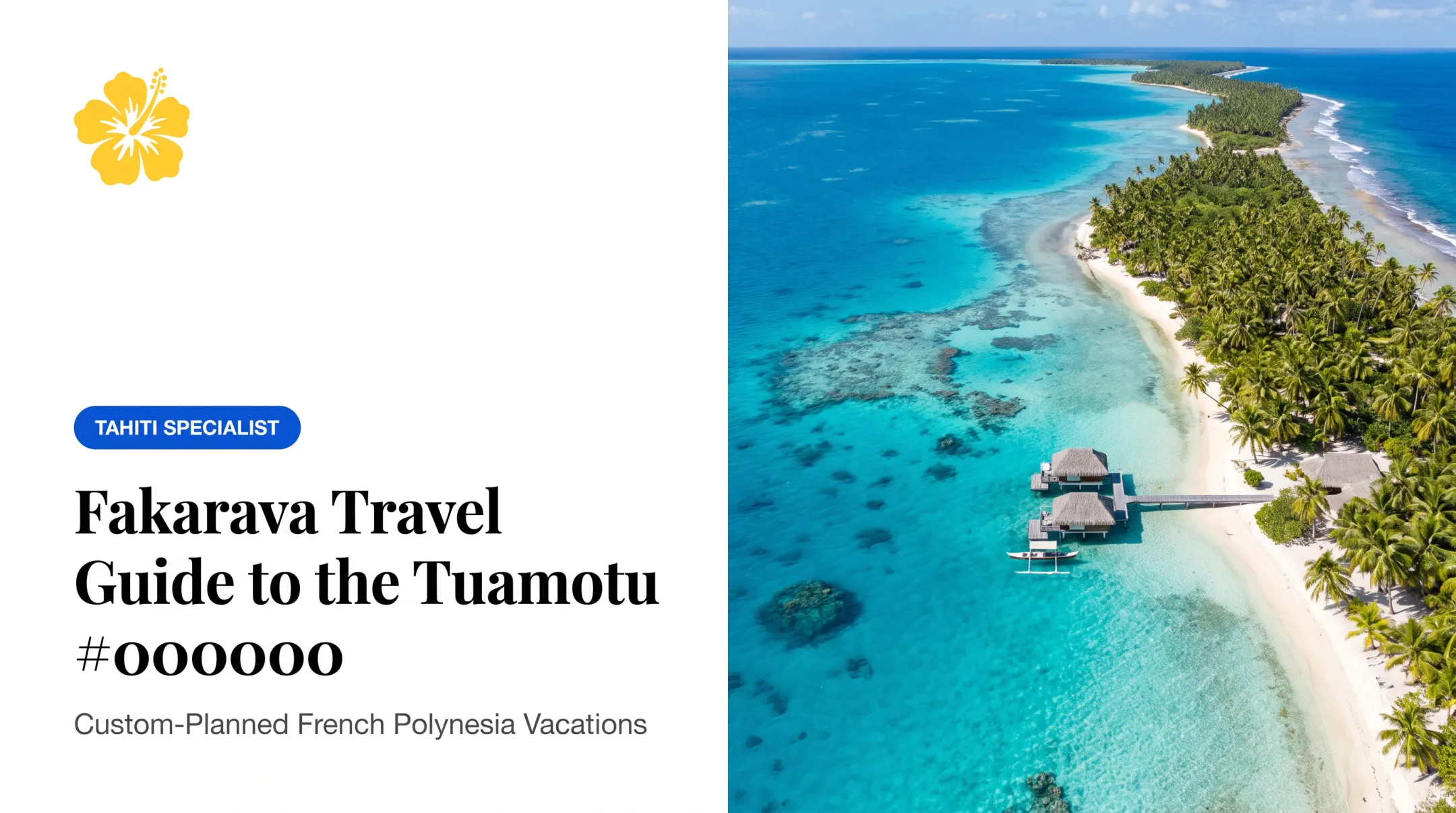
Now picture something entirely different: a thin ring of coral barely rising above the sea, encircling a lagoon so clear it looks unreal.
That's the Tuamotu Archipelago. Tahiti Tourisme counts 76 atolls scattered across roughly 1.2 million square miles of ocean, making this one of the most widely dispersed island groups on the planet.
This guide breaks down what an atoll actually is, which Tuamotu destinations are realistic for first-time visitors, what you'll do once you're there, and how to plan the trip from the US without surprises. If you're chasing serious diving, quiet beaches, and slow island time rather than shopping malls and nightlife, keep reading.
Key Takeaways
- Expect remote coral atolls—not volcanic peaks—scattered across French Polynesia’s farthest waters.
- Choose Rangiroa, Fakarava, Tikehau, or Manihi for the easiest visitor access.
- Pick Tahanea, Makemo, Toau, or Apataki if you want fewer crowds and more adventure.
- Match your atoll to your priority: diving, pearls, seclusion, or wildlife.
- Limited flights and infrastructure mean planning ahead pays off.
What Are the Tuamotu Islands and Atolls?
The Tuamotu Archipelago is one of five island groups that make up French Polynesia, and it's the largest chain of atolls anywhere in the world. Based on 2022 census data compiled by the Institut de la statistique de la Polynésie Française, the 16 Tuamotu communes had a combined municipal population of 15,159 residents — a small number scattered across an enormous stretch of ocean.
How an Atoll Actually Forms
An atoll starts life as a volcanic island. Over millions of years, that island sinks beneath the sea while a coral reef keeps growing upward around its edges. Eventually, only the ring remains: a lagoon enclosed by a reef and dotted with small islets called motu. Narrow channels known as passes cut through that ring, letting ocean water flow in and out.
Those passes pull nutrient-rich water through the reef, feeding the marine life that makes Tuamotu diving famous. Navigating them safely is a job for experienced boat captains and dive operators, not something visitors need to plan around themselves.

Tuamotu Atolls vs. Tahiti, Moorea, and Bora Bora
The contrast with French Polynesia's volcanic islands is stark:
- Elevation: Tahiti and Bora Bora rise thousands of feet; most Tuamotu motu sit just a few feet above sea level.
- Scenery: Volcanic islands offer hiking trails and mountain views; atolls offer flat coastlines and endless lagoon.
- Infrastructure: Bora Bora has roads, shops, and multiple resorts. Many Tuamotu atolls have a single airstrip and a handful of guesthouses.
- Pace: Expect fewer restaurants, slower Wi-Fi, and far less built-up tourism.
That quieter pace sits alongside a deep Polynesian heritage. Pearl farming and copra (dried coconut) production are still practiced across the archipelago today.
Which Tuamotu Atolls Should You Visit?
Not every atoll suits every traveler. Here's how the four most-visited atolls compare:
| Atoll | Best Known For | Good Fit For | Accommodation Style |
|---|---|---|---|
| Rangiroa | Large lagoon, Tiputa and Avatoru passes, pearl farms | First-time Tuamotu visitors | Hotels and guesthouses |
| Fakarava | UNESCO Biosphere Reserve, pass diving, marine biodiversity | Divers and nature-focused travelers | Guesthouses, smaller-scale stays |
| Tikehau | Pink-white sand motu, calm pace, paddleboarding | Couples wanting quiet over adventure | Resort plus family guesthouses |
| Manihi | Black pearl farming, seclusion | Privacy seekers, culture-focused travelers | Small family guesthouses |
Rangiroa is often the easiest entry point into the Tuamotus. Its lagoon is one of the largest in the world, and its two named passes offer both diving and gentler snorkeling depending on conditions. Pearl farm visits and dolphin encounters (when locally operated) round out the experience.
Fakarava anchors a UNESCO biosphere reserve spanning seven atolls, and it's earned its reputation among serious divers. Its southern pass has been the site of scientific studies documenting exceptional reef shark aggregations, which is part of why marine researchers keep coming back.
A 2016 study published in Current Biology documented roughly 600 reef sharks gathering in that same pass, though sightings on any given day still depend on conditions.
Tikehau trades intense pass diving for a slower rhythm: motu walks, kayaking, and sandbanks that feel private even when you're not alone.
Manihi built its identity on Tahitian black pearls. It's quieter and less developed than the others, better suited to travelers who want cultural depth over resort amenities.
Less-Visited Atolls Worth Knowing About
Tahanea, Makemo, Toau, and Apataki aren't interchangeable resort stops. They're better suited to:
- Private yacht charter itineraries
- Expedition-style small-ship cruises
- Travelers comfortable with minimal services
Treat these as extensions for a second or third Tuamotu trip, not a starting point.
What Can You Do in the Tuamotu Islands?
Diving and Snorkeling
Pass diving is the headline activity. Rangiroa's Tiputa and Avatoru passes and Fakarava's Garuae and southern passes draw divers hoping to see sharks, rays, turtles, and dense schools of reef fish.
Signature sites include:
- Tiputa and Avatoru passes (Rangiroa)
- Garuae and the southern passes (Fakarava)
- Operator-vetted snorkel spots away from strong pass currents
Snorkelers should use sites a local operator recommends for that day's tide—not every pass suits a non-diver.
Even strong sites can't promise wildlife on cue. Seasonal events, such as grouper aggregations researchers have documented around full moons in Fakarava, depend on biology and timing.

Lagoon and Motu Excursions
Away from the passes, the lagoon is the other half of the trip:
- Boat tours to secluded sandbanks and motu
- Drift snorkeling with licensed local guides
- Paddleboarding and kayaking across glassy water
- Sunset cruises over the lagoon
Culture, Pearls, and Local Life
Plan time on land as well. Black pearl farm tours—especially in Manihi and Rangiroa—show a craft still central to the local economy.
Village visits, Polynesian food, and copra demonstrations round out the cultural side. Treat them as an invitation into someone's community, not a photo stop.
Best match by traveler:
- Divers: Fakarava and Rangiroa
- Honeymooners: Tikehau
- Pearl and culture fans: Manihi
- Photographers and return visitors: remote atolls by yacht or small-ship cruise
A specialist can pair the right atoll with dive days, pearl visits, or a cruise/yacht leg so the logistics match how you actually want to travel.
How to Plan a Tuamotu Islands Vacation
Getting There From the US
There's no direct flight from the US to the Tuamotus. Travelers fly into Papeete, Tahiti, first, typically on an 8-hour nonstop flight from Los Angeles, San Francisco, or Seattle, then connect to the desired atoll via a 30- to 60-minute inter-island flight on Air Tahiti.

US citizens traveling as tourists don't need a visa for stays up to 90 days within a 180-day period, according to the US Department of State's French Polynesia travel information. Confirm passport validity and onward-travel proof before departure, since requirements can shift.
Choosing Your Trip Style
- Single-atoll stay — simplest logistics, best for a focused honeymoon or dive trip
- Multi-atoll itinerary — more variety, but requires careful flight timing
- Small-ship cruise — 10- to 14-night sailings that pair the Tuamotus with the Society Islands and anchor in shallow lagoons
- Yacht charter — available year-round, reaching bays and beaches larger vessels can't access
Accommodations and Services
Set expectations early. Outside Rangiroa and Tikehau, don't count on full-service resorts. Guesthouses and small pensions are the norm, and dining options, Wi-Fi, and medical services thin out fast once you leave the main hubs.
When to Travel
Cruise pricing is a useful seasonal guide:
- Peak (June–September): dry season, highest rates
- Shoulder (April–May, October): milder demand and pricing
- Value (November–March): wetter season, lowest rates
Rainfall usually peaks in December and January. Weigh weather against diving and budget—no single month fits every traveler.
Planning Checklist
- Passport valid well beyond your return date
- Travel insurance covering remote medical evacuation
- Reef-safe sunscreen
- Prescription medications packed in carry-on
- Snorkel gear or water shoes if you have preferences
- Cash for smaller pensions and local vendors
- Confirmed transfers and excursions before arrival
Piecing together atoll flights, lodging gaps, and transfers is where most DIY plans stall. Magical Tahiti Vacations is a fee-free planning service for Tahiti and French Polynesia. The team compares atolls, resorts, cruises, flights, and transfers, then builds one itinerary around your budget and priorities.
Travel Responsibly and Set Expectations
The lagoons and reefs that make the Tuamotus special are fragile. A few ground rules apply everywhere:
- Never touch coral or stand on the reef
- Never feed or chase marine animals
- Use reef-safe sunscreen
- Follow your guide's instructions on every excursion
Beyond conservation, support the local economy and respect village life:
- Book locally owned pensions
- Hire local guides
- Buy pearls straight from the farms that produce them
- Ask before photographing residents
- Dress modestly in villages
Remoteness is the whole point of a Tuamotu trip, but it comes with trade-offs. Nightlife is minimal, connectivity is unreliable, and a canceled flight can reshuffle an entire itinerary. For a honeymoon or luxury escape, that is why it helps to plan with someone who has built these itineraries before.
Ready to talk through your ideal atoll, dates, and pace? Magical Tahiti Vacations can help you build a Tuamotu trip around what actually matters to you.
FAQ
How many days do I need in the Tuamotus?
Most travelers spend 3-4 nights per atoll, with a full Tuamotu trip running 7-10 nights when combined with Tahiti. Shorter stays risk losing a full day to flight connections.
Can I visit the Tuamotus without diving?
Absolutely. Snorkeling, lagoon tours, paddleboarding, and pearl farm visits don't require dive certification, and atolls like Tikehau suit a relaxed, non-diving pace.
Is Rangiroa or Fakarava better for beginners?
Rangiroa generally offers gentler conditions and more accommodation variety, making it the easier starting point. Fakarava suits travelers already comfortable in the water.
Do I need a visa to visit French Polynesia from the US?
No. US citizens can stay up to 90 days within a 180-day period without a visa, though passport and onward-travel documentation still apply.
What's the best time of year to visit?
May through October brings drier, cooler weather and offers the most reliable weather, though it's also when rates run higher.
How do I get between Tuamotu atolls?
Inter-island flights on Air Tahiti connect most visited atolls, typically running 30 to 60 minutes, though schedules vary and should be confirmed before booking lodging.